Poland:
The best samples of Romanesque architecture in Polska area unit found in Krakow and embody St. Andrew’s Church (1079-1098) and St. Wojciech’s Church (1000s). stepping into the Gothic vogue, Cracow once more is home to maybe the country’s best example in St. Mary’s Basilica (1200-1300s), though St. Mary’s Church in port (1300-1400s) also can stake a claim for that title. In fact, a lot of of port was in-built the Gothic vogue, but most of the town was destroyed throughout war II therefore what’s seen nowadays is primarily restored. The city of Kazimierz Dolny is another nice example of a Medieval city as this community, for the foremost half, survived the war intact. the ultimate Gothic structure value mentioning is Malbork Castle (built by the Teutonic Knights in 1200-1400s; improved within the 1950-1960s), that is that the world’s largest brick castle and in an exceedingly vogue that reflects its Teutonic German past.
Polish Gothic Architecture:
The image might make you think about medieval times. That’s because the picture features a Gothic castle in Poland. Those castles, with their distinctive steep red gable roofs and tall brick walls, were built during the Gothic period of Polish architecture. Gothic architecture has always inspired legends and tales, and it is probably one of the most remembered styles of the Medieval Period, also known as the Middle Ages.
The Gothic style evolved from the Romanesque style and arrived in Poland with the Franciscan and Dominican orders during the first half of the 13th century. It was a time of prosperity for the lands of Poland, so the style flourished widely and was adopted not only by the church for cathedrals but also by governors for civic and military constructions, including new castles, town halls, wall gates, and even houses. The diverse uses set Gothic architecture in Poland apart from Gothic architecture in other parts of Europe. The style continued to evolve until the late 15th century when the Renaissance arrived.

Olsztyn Castle in Poland
St. Michael the Archangel Church:
Throughout Polish history, however peaking within the 1400s and 1500s, an oversized range of picket churches were created in southern Poland, within the Tatras Mountains. Shockingly, several of those churches survive to this. There are nearly twenty of those churches from the 1400s-1700s and that they are usually found in mountain villages. one among the foremost spectacular is St. archangel the Archangel Church (1400s), that is found within the small city of Debno (about 1,000 people).
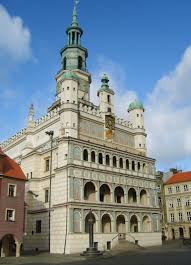
Unlike a lot of of northern Europe, European country prospered throughout the Renaissance and therefore the Zygmund Chapel (1519-1533) in Wawel Cathedral (Poland’s Royal Castle and therefore the kings’ cathedral) in metropolis is commonly thought of the most effective example of Renaissance art north of the Alps. throughout this same time, the royal castle of Wawel itself was restructured within the Renaissance vogue. Poznan’s government building was additionally created within the vogue as was the complete town of Zamosc, that was designed as a defensive fortress by Italian architects.

Polish Renaissance architecture is divided into three periods: The First period (1500–1550), is the so-called “Italian”. Most of Renaissance buildings built at this time were by Italian architects, mainly from Florence including Francesco Fiorentino and Bartolomeo Berrecci.
In the Second period (1550–1600), Renaissance architecture became more common, with the beginnings of Mannerist and under the influence of the Netherlands, particularly in Pomerania. Buildings include the New Cloth Hall in Kraków and city halls in Tarnów, Sandomierz, Chełm (demolished) and most famously in Poznań. Zamość is a unique example of a Renaissance town in Central Europe. [1]
In the Third period (1600–1650), the rising power of Jesuits and Counter Reformation gave impetus to the development of Mannerist architecture and Baroque.
The next vital vogue to arrive to Poland was the Baroque vogue, however as today’s Poland includes lands that were traditionally German, the fashion immensely differs from the eastern to western a part of the country. Branicki Palace (1600-1700s) in Bialystok and Aula Leopoldina (1600-1700s) in metropolis University ar each during this vogue, however immensely dissent. However, Wilanow Palace (late 1600s) just outside of warsaw [capital of Poland] is probably the foremost spectacular example of the fashion in Poland.
During this same time, ancient picket design [wooden architecture] was continuous engineered, most strikingly within the style of churches. The foremost spectacular of those churches from the 1600s (in addition to those in Poland’s south) are in regions that were at the time a part of Germany. Those embrace the Church of Peace in Jawor (1610–1688) and therefore the Church of Peace in Swidnica (1600s), each within the Lutheran German vogue.
The late 1700s and 1800s saw the increase of the neo-Classical vogue and therefore the most serene example from this point comes with the numerous palaces in Lazenki Park in Warsaw. This park was a personal reserve for Poland’s last kings and that they engineered various tiny palaces within the vogue, but the park’s natural beauty usually leaves a a lot of lasting impression on the visitor.

Renaissance Krakow:
With the Industrial Revolution in the late 1800s came new construction styles, techniques, and materials. One of the most impressive early buildings from this time was built in what was Germany at the time, in the Centennial Hall (1911-1913) in Wroclaw. This is essentially a monument to concrete construction today.
With the Industrial Revolution within the late 1800s came new construction designs, techniques, and materials. One among the foremost spectacular early buildings from this point was in built what was FRG at the time, within the Centennial Hall (1911-1913) in metropolis. this can be basically a monument to concrete construction these days.
Few different notable structures have been built in the 1900s as communism demanded most construction be within the communist vogue. Whereas several cities have communist alignment lodging buildings, Warsaw’s Palace of Culture (1952-1955) and Krakow’s Nowa Huta (1949-1950s) are each unambiguously Polish samples of the communist vogue in Poland.

Modern Warsaw:
For modern architecture, Warsaw is that the solely location actually warrant mention, but most of Warsaw was destroyed throughout world war II therefore what’s seen nowadays square measure primarily reconstructions from their past (such as their previous Town) and modern architecture.
For a additional authentic and actually Polish illustration of the country’s field of study history, Krakow is that the solely possibility. Krakow’s previous city has buildings in each vogue, several of that square measure the most effective examples within the country. Plus, Wawel Cathedral contains mortuary chapels of the Polish kings and these touch a fundamental quantity of centuries, every being within the type of the time. There square measure few places in Europe that you simply will see such dramatic and ornate samples of every vogue inside identical building.

Ukraine:
After the union with the Tsardom of Russia, architecture in Ukraine began to develop in different directions, with many structures in the larger eastern, Russian-ruled area built in the styles of Russian architecture of that period, whilst the western Galicia was developed under Austro-Hungarian architectural influences. In both cases producing fine examples. Ukrainian national motifs would finally be used during the period of the Soviet Union and in modern independent Ukraine.
Pre-history and early period:
Architectural constructions in Ukraine date back to the Paleolithic Period. By the end of the Neolithic Period (5000–2500 BC) the Trypilian culture had developed among the tribes inhabiting Right-Bank Ukraine. Their buildings were constructed according to Greek style and were enriched by vaults of wedged stone, which were unknown in Greece itself. In the 6th–3rd century BC many fortified settlements were built by the Scythian tribes.

The Princely Era:
Byzantine culture flourished under the Macedonian dynasty (867–1057).During this period the Kyivan state adopted Byzantine Christianity and its rich architectural traditions. Drawing on their own tradition of wooden folk architecture and on certain Western influences, the architects of Kyivan Rus’ adapted the Old Christian and Byzantine styles to local conditions and created their own synthesis. This original and creative interpretation permits one to speak of a Ukrainian style.
The Kyivan grand prince Volodymyr the Great built the first famous stone church—the Cathedral of the Holy Mother of God, or the Church of the Tithes (989–96).

After the Mongol-Tatar invasion (second half of the 13th to the 16th century):
After the Tatar invasion construction was restricted to small buildings, and these were built mostly in the western territories (known as the Principality of Galicia-Volhynia until the middle of the 14th century).

The Renaissance:
The Renaissance style of architecture was adapted to the Byzantine-Ukrainian heritage and to the Ukrainian character. The style developed mainly in towns that were built on the Western European pattern. Italian and then German, French, and native architects constructed new churches and private and municipal buildings and reconstructed castle-fortresses, finishing them in the new style.

The baroque period:
The architecture of the late Renaissance displayed certain features of the early baroque: dynamism, spiral lines, mannerisms, decorativeness. The Boim family chapel (1609–11) and the Church of Good Friday in Lviv are examples of the late Renaissance, while the church built by Hetman Bohdan Khmelnytsky in Subotiv(1653), with its imposing front, already belongs to the early baroque. The baroque was an expression of 17th- and 18th-century European culture.

Wooden architecture:
Wooden churches in Ukraine deserve particular attention because of their beautiful contours, proportions, and functionality. The oldest preserved churches (16th–17th century) are mostly in the Carpathian Mountains, particularly in the Boiko region.
 History Of European Architecture