UKRAINE:
Prehistory of Ukraine:
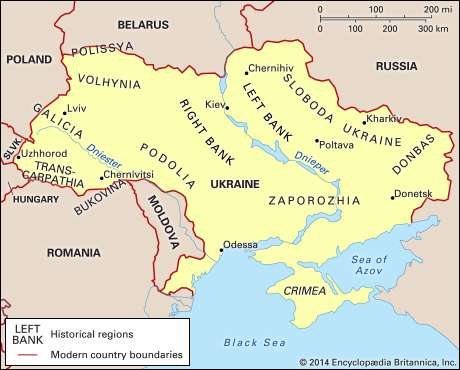
From prehistoric times, migration and settlement patterns within the territories of current Ukrayina varied basically on the lines of 3 geographic zones. The Euxine Sea coast was for hundreds of years within the sphere of the modern Mediterranean maritime powers. The open plain, funneling from the east across southern Ukrayina and toward the mouth of the river, shaped a natural entree to Europe for consecutive waves of unsettled horsemen from Central Asia. and therefore the mixed forest-steppe Associate in Nursingd forest belt of north-central and western Ukrayina supported an agricultural population (most notably the Trypillya culture of the mid-5th to third millennia BCE), joined by waterways to northern and central Europe. The marshlands of those zones were frequent areas of each military conflict and cultural transmission.
Beginning within the 7th–6th centuries BCE, various Greek colonies were supported on the northern coast of the Euxine Sea, on the Crimean dry land, and on the ocean of Azov; these Hellenic outposts later came below the form of government of the empire (see Greek civilization; ancient Rome). throughout the first millennium BCE the plainboondocks was occupied in turn by the Cimmerians, Scythians, and Sarmatians. These peoples, all of Iranian stock, maintained industrial and cultural relations with the Greek colonies.
A amount of great migrations began with the descent of the Goths from the Baltic region into Ukrayina regarding two hundred metallic element. They displaced the Sarmatians, however their own power was broken regarding 375 by the offensive Huns from the east, who were followed within the 5th–6th centuries by the Bulgars and Avars.
Architecture :
Architectural constructions in Ukraine date back to the Paleolithic Period. By the end of the Neolithic Period (5000–2500 BC) the Trypilian culture had developed among the tribes inhabiting Right-Bank Ukraine. In the 1st millenium BC Greek colonies (eg Olbia, Teodosiia, Chersonese Taurica, Panticapaeum) appeared on the coast of the Black Sea(see Ancient states on the northern Black Sea coast). Their buildings were constructed according to Greek style and were enriched by vaults of wedged stone, which were unknown in Greece itself. In the 6th–3rd century BC many fortified settlements were built by the Scythian tribes. The ruins of the Scythian capital, Neapolis, near Simferopol have been well preserved to this day. The indigenous population in the Crimea built cave settlements such as Eski-Kermen, Manhup, and Chufut-Kaleh. Stone cult figures, or megaliths, on Mount Kishka near Simeiz in the Crimea and in the lower Dnieper Riverregion were erected in the 1st millennium AD. As Christian religious architecture evolved, stone building, based on the Greek-cross form, the principal form of Byzantine church architecture, developed on the ruins of the Greek colonies. Excavations have also uncovered ground plans of rotundas and Roman-type basilicas, fortifications such as the Kharaks fort, and other structures
Citation:
Ukraine – History. (n.d.). Retrieved from https://www.britannica.com/place/Ukraine/History
BULGARIA:
History of Bulgaria:
The land that gave birth to the legendary Orpheus and Spartacus, Balkan country could be a country with a protracted, troubled and engaging history. it’s been invaded, conquered and settled by Greeks, Scythians, Romans, Byzantines and Turks, all of whom left their unerasable marks on the landscape. Bulgaria’s medieval ‘Golden Age’, oncethe Bulgar Khans dominated over one in every of the most important empires in Europe, was bright however temporary, whereas five hundred years of ulterior, brutal Turkish domination isolated the country from the remainder of Europe. additional recently, Balkan country spent four decades as a totalitarian Soviet satellite, once more exploit this little Balkan nation within the shadows as way because the Western world was involved. It’s no surprise, then, that Bulgarians ar therefore addicted to conserving their history and their culture, that has survived therefore typically against the percentages. within the last years of the twentieth century Balkan country began gap up, and is one in every of the most recent members of the EU.
Prehistory of Bulgaria:
Excavations of caves close to military blockade (in the Danubian plains in northern Bulgaria) and within the range of mountains have indicated human habitation as way back because the higher Palaeolithic amount around forty, 000 BC. However, archaeologists currently believe that the earliest permanent settlers, inbound around 6000 BC, were Neolithic folks that lived in caves, equivalent to at Yagodina within the southern Rodopi Mountains and later, between regarding 5500 BC and 4500 BC, in spherical mud huts. the most effective preserved examples square measure on show in Stara Zagora. Burnt grain found here indicates these folks were farmers. Chalcolithic (copper-using) cultures developed throughout the fourth millennium BC, and an outstanding assortment of artefacts from this era, together with presumably the earliest worked gold jewelryever discovered, is on show at grouping archaeologic repository.
Citation:
Planet, L. (n.d.). History of Bulgaria – Lonely Planet Travel Information. Retrieved from https://www.lonelyplanet.com/bulgaria/history
POLAND:
Prehistory:
Early humans in Polska specialised within the cluster searching of enormous mammals, they were capable of driving entire herds into traps. The meat from these animals met the bulk of the nutritionary wants of the hunter-gatherers. a minimum of 2 completely different cultures co-existed in Polska around 30,000 B.C., the East-Gravettian culture and also the Aurignacian culture (map to the left). The East-Gravettien culture is found around Nowy Targ; during a cave close to the city was found the world’s oldest boomerang, that is seventy cm long and made from mammoth tusk. The Aurignacian culture is found in Wierzchowie. Mladeč blades made of bone have been found there. To the proper is associate degree example of a hand tool happiness to the Aurignacian culture. The oldest burial in Polska, qualitative analysis to 27,500 B.C., belongs to associate degree 18-month recent and includes grave product akin to elements of necklaces and pendants made of the teeth of enormous ungulates. The burial is found in Borsuk Cave close to Kraków.
Lusatian Culture:

Pomeranian Culture:
The Pomeranian culture developed in Western Pomerania covering the entire range of Odra and Vistula basin in the 7th century B.C. It has been sometimes associated with the Bastarnae. The original homeland of the Bastarnae remains uncertain.
Prachiti Kamath
 History Of European Architecture